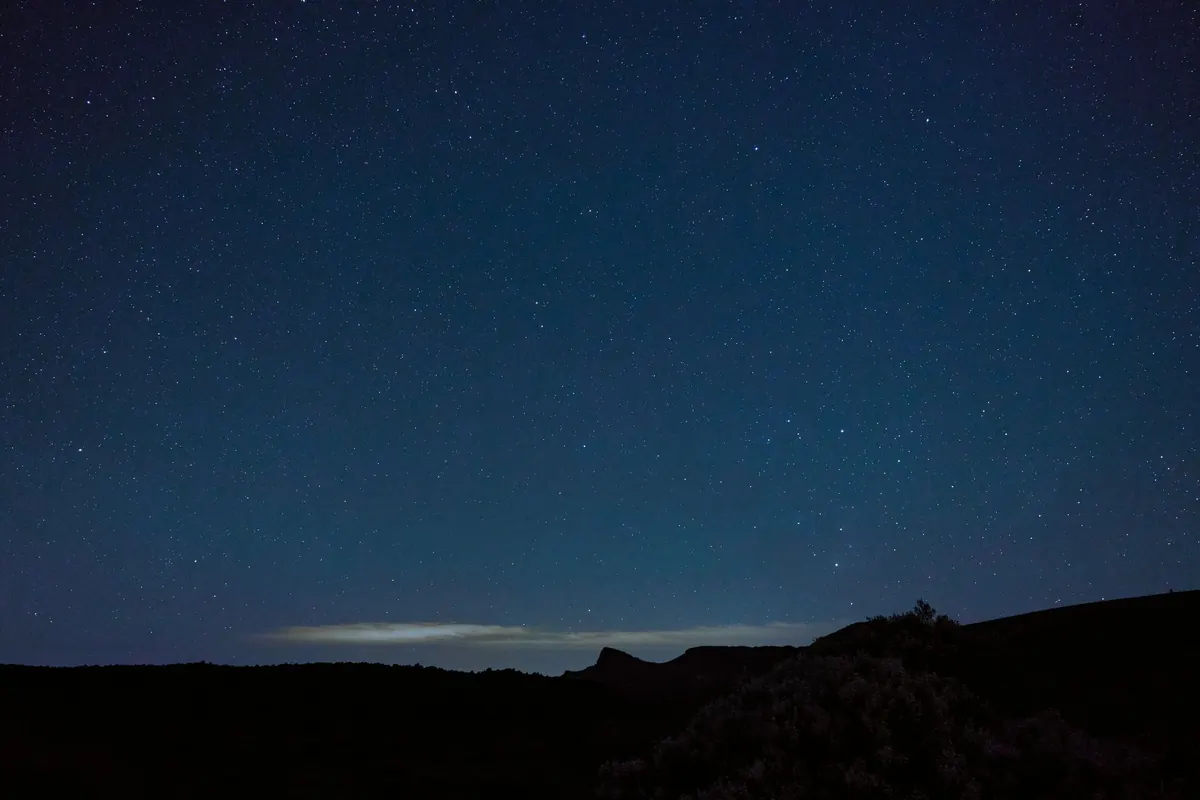
There's a particular hush that settles over a field at eleven o'clock on a clear October night, when twenty people are queuing for a look at Saturn and nobody wants to be the one who breaks the silence. That's the atmosphere most UK astronomy clubs are built around — and the quickest way to find it is to turn up to a meeting.
The reassuring part is that nobody expects you to own a telescope, know the constellations, or be able to explain what a Dobsonian mount is. Clubs exist because their members enjoy showing people things. All you have to do is find the right one and walk through the door.
Work Out What Kind of Club Suits You
"Astronomy club" covers a wide range of groups, and they feel quite different once you're in the room.
- General societies meet monthly for a talk, usually with tea, notices and a raffle, and arrange observing sessions when the weather allows. Good if you want structure and a broad mix of topics.
- Observing groups are less formal and more weather-dependent. They tend to have a regular dark site, a group chat that fills up on clear evenings, and members who will happily spend an hour helping you get a second-hand reflector working.
- Astrophotography groups suit anyone tempted by imaging. Expect long conversations about mounts, guiding and processing, and a lot of patience with clouds.
- University societies often welcome the public at their talks, and some run open observatory nights during term time.
- Specialist circles focus on solar observing, the Moon, variable stars or telescope making. Many sit within a larger society rather than existing separately.
A club forty minutes away with a proper dark site may serve you better than one five minutes away that never observes. Think about which evening you can realistically protect each month, too. A Tuesday meeting you can always attend beats a Saturday one you keep missing.
Where to Find Clubs Near You
Most UK societies are small, volunteer-run and quietly bad at advertising. You often have to look in the right places rather than wait to be found.
- Search for "astronomical society" plus your town, county or nearest city — try the county name as well as the town, because boundaries are rarely obvious.
- The Federation of Astronomical Societies keeps a directory of affiliated clubs across the UK, which is a sensible first stop.
- Go Stargazing lists public stargazing events, and the organisers named on those listings are usually local club members.
- The British Astronomical Association has regional meetings and can point you towards groups in your area.
- Noticeboards in libraries, leisure centres, museums and university physics departments still work surprisingly well.
- Planetariums, science centres and public observatories often host club nights or can tell you who meets nearby.
- Local Facebook groups, Meetup and community forums are worth a search for your area plus "astronomy".
- Staff at an independent camera or outdoor equipment shop often know the local scene.
Check the club's website or social page before travelling. Many societies run a programme from September to May and go quiet over the summer, and venues occasionally change at short notice.
What Happens at a Typical Meeting
Most evenings follow a familiar shape. People arrive, set out chairs, and chat about the weather forecast. There's a talk — sometimes from a member, sometimes a visiting speaker — lasting around an hour, followed by questions. Then a break for tea and biscuits, which is where the real business happens: news of a comet, a bargain eyepiece someone spotted, a plan for the weekend.
If the sky is clear, someone will suggest going outside. If it isn't, the conversation continues indoors, which is why the tea break matters more than newcomers expect. This is the part where you mention that you've never used a telescope before and discover that three people are keen to help.
Etiquette is simple. Ask before touching anyone's equipment. Keep white torches and phone screens pointed at the ground, or better still use a red-light setting, because it takes twenty minutes for eyes to adapt to the dark and one bright screen undoes it for everyone. Ask questions freely, but save the long ones for the break if a talk is still running.
The observing night is the real test
Dress far more warmly than you think necessary: thermal layers, thick socks, boots, hat and gloves, even in spring. Take a flask and a folding chair. Standing still in the cold for two hours is much harder than walking for two hours, and people leave early because of it. If you bring nothing else, bring patience — the best views often come after everyone else has given up.
Your First Visit: A Short Checklist
- Find the date, time and venue on the club's website, and check whether visitors are welcome at that particular meeting.
- Arrive ten minutes early and introduce yourself to whoever looks like they're organising things. Say it's your first time.
- Bring nothing but curiosity. Binoculars are a bonus, not a requirement.
- Ask two questions: how does membership work, and when is the next observing session?
- Ask what visitors are expected to pay on the door, and what the annual subscription covers.
- Stay for the tea. It's where you'll meet the people you'll actually observe with.
- Follow up by email or the club's contact form within a week, while names are still fresh.
If money is tight, ask whether there's a concession rate for students, unwaged members or a first-year discount — many clubs offer something along those lines, but it's rarely advertised. As with any subscription, confirm the current fee and what happens if you join mid-year before you pay.
What Membership Gets You
Annual subscriptions vary widely between clubs and are usually modest compared with most hobbies. In return you might get a monthly newsletter, access to a members-only dark site, a loan library of telescopes and eyepieces, discounts on books or magazines through affiliated organisations, and the company of people who will answer the question you've been too embarrassed to ask anywhere else.
Affiliation to a national body often brings public liability insurance for club events. That matters more than it sounds: it's what allows a group to set up telescopes in a park, at a school or on a high street without worrying about the paperwork.
Outreach: The Part Most People Fall For
Almost every club runs public events, and almost every club needs more hands. Outreach is the reason many members stay. It might be a stargazing evening in a country park, a stand at a village fête, a talk to a scout or Brownie group working towards a badge, or a session for a school science club.
You don't need deep knowledge to help. Useful jobs include setting up equipment, managing the queue at the eyepiece, handing out star maps, and talking to families while they wait. Learn to show three or four things well — the Moon, Saturn's rings, the Pleiades, a colourful double star — and you'll be genuinely useful within a month. Keep the language plain. "That's a cluster of a few hundred stars, about four hundred light years away" lands better than a lecture on spectral classification.
Practical touches matter: a small step stool so children can reach the eyepiece, a red torch, a laminated card of facts, and a realistic word about what the weather will allow. Never promise a view you can't deliver.
If you want something more substantial, many clubs contribute real observations — sunspot counts, meteor watches, variable star estimates — and there are national organisations that welcome beginners into those programmes. It's a good route from enthusiastic newcomer to someone who knows their way around the sky.
Take the First Step This Month
Pick three clubs within reasonable driving distance and check their meeting dates. Email the secretary or use the contact form, saying you're new, you have no equipment, and you'd like to come along as a visitor. Then put the date in your diary and go — even if the forecast is poor, because a wet Tuesday in a church hall is still the fastest way in.
If the nearest club is a long drive, ask about car sharing, or join a national organisation for its journal and meetings while you look for something closer. And if there's genuinely nothing within reach, a handful of people, a library room and a shared telescope is how most of these clubs started in the first place.
Photo: katetrysh / Pixabay